
Science
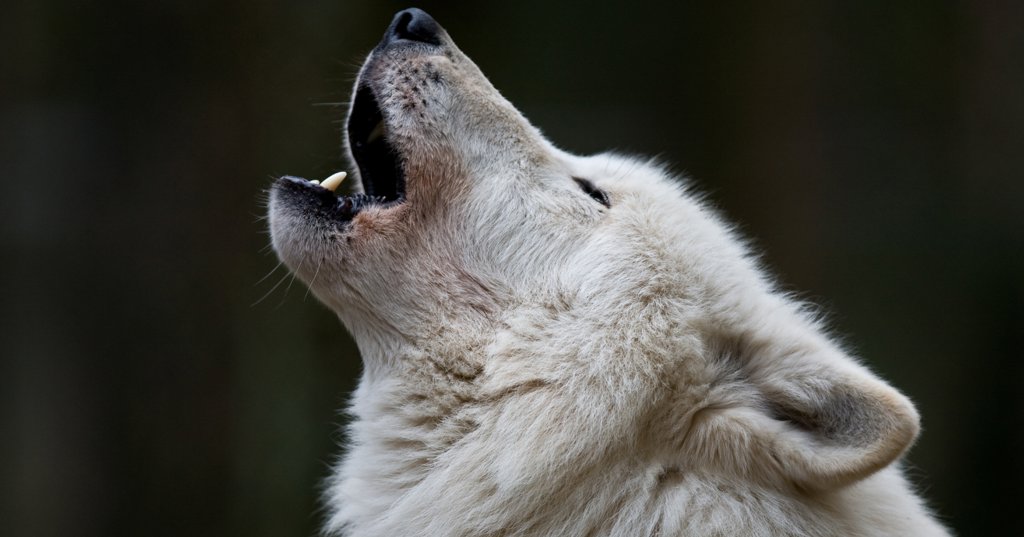
The permafrost's deepest freezer just gave up one of its most pristine secrets—a wolf so perfectly preserved that scientists can study its brain, tissue and final moments from an Ice Age that ended long before humans domesticated its descendants.
Published September 15, 2026 · How we edit
Forty thousand years in cold storage, and the animal still looked annoyed.
That was roughly the scene on the bank of the Tirekhtyakh River in north-eastern Siberia in the summer of 2018, when a man out hunting mammoth ivory pulled something furry from the thawing ground. Not a tusk. A wolf’s head, ears up, fangs showing, fur still brown and dense, whiskers in place, about 40 centimetres from nose to the ragged edge where the neck ended. He handed it to the mammoth fauna department at the Academy of Sciences of the Republic of Sakha. Its director, Albert Protopopov, told CNN that frozen wolf cubs had surfaced before, but never a grown animal with its soft tissue preserved.
What the ground kept
Skin, muscle, teeth and a brain, all still there forty thousand years on.
Permafrost is not a gentle preservative so much as a stubborn one. Ground that stays below freezing year-round stops the bacteria and enzymes that normally take a carcass apart, and anything buried fast enough simply stalls there. Yakutia has a lot of it, which is why the region keeps producing mammoths, bison, cave lion cubs and horses in conditions that look closer to butchery than palaeontology. What made this find unusual was the size and the age of the animal. As reported by Live Science, the head alone runs to roughly half the body length of a living grey wolf.
Nobody cut it off
A severed head in permafrost invites an obvious explanation: human or animal interference. Researchers ruled it out without opening anything up. Naoki Suzuki of the Jikei University School of Medicine in Tokyo ran the specimen through a CT scanner to build a three-dimensional model of the skull and brain cavity, work described by Sci.News alongside the first public showing of the find.
Writing in Biology Bulletin in 2023, Valerii Plotnikov, Protopopov, Suzuki and the Swedish geneticist Love Dalen reported no marks from a person or a scavenger anywhere on the sample. Moving ice had done it. Frozen ground shifts, splits and grinds over tens of thousands of years, and a neck is a weak point.
That same paper quietly demoted the animal. Early reports called it a fully grown wolf of two to four years. Measuring tooth wear and the pulp cavity of the upper canine, the researchers put it at around a year old, eighteen months at most. A big adolescent, then, with a head the size of a small dog.
The number in the headline kept moving
Announcements travel faster than papers, and the age of this wolf shows the gap. Early dating placed it beyond 40,000 years, and that figure went around the world. AFP reported a date closer to 32,000 years, which is the number Smithsonian magazine used when it covered the find. Plotnikov and colleagues instead place it in the Karginskii interval of the Late Pleistocene, a warmer stretch of Siberian prehistory generally dated to somewhere between 50,000 and 24,000 years ago.
All three statements can sit in the same broad range without anyone being wrong. They just cannot sit in the same headline.
One head, 72 genomes
A single spectacular specimen tells you about one animal. Dalen’s other work puts that animal in company. In a paper published in Nature in 2022, Anders Bergstrom, Pontus Skoglund and a large international team sequenced 72 ancient wolf genomes spanning the past 100,000 years, drawing on permafrost material from Siberia, Europe and north-western North America.
Two findings stand out. Ice Age wolf populations across the northern hemisphere were far less genetically separated than wolves are today, suggesting animals roaming and breeding across enormous distances in open country. And unlike mammoths, cave lions and woolly rhinos, wolves never came close to dying out. Earlier studies had read Pleistocene wolves as extinct side branches. Continuous gene flow, the authors argue, simply smoothed the older lineages into the newer ones.
The same dataset places dog ancestry at the eastern end of Eurasia, with a second, western wolf population contributing to dogs in the Near East and Africa. This part of the story is contested, and the authors say plainly that no sampled wolf genome is a direct match for either ancestry.
Why these keep turning up
Protopopov has been blunt about the reason his department’s workload keeps growing: the permafrost is thawing, and it is handing over its contents. Every fresh mummy is, in that sense, a receipt.
Museum cases in Yakutsk and Tokyo are filling with animals that were never meant to be seen again, and the collection grows in exact proportion to how badly the ground is failing. A very good century for palaeontology. A worrying one for everything standing on top.
Written by
Space Daily Editorial Team The Space Daily Editorial Team produces content across our two editorial pillars: space industry news and Mind & Meaning. We cover launches, missions, satellites, defense, and the technology of getting humans to space, alongside the psychology of ambition, isolation, and meaning under extremes. Articles reflect our team's collective editorial process, source verification, drafting, technical review, and editing, rather than a single writer's work. Space Daily takes editorial responsibility for content under this byline. For more on how we work, see our editorial policy.
More from this author →